

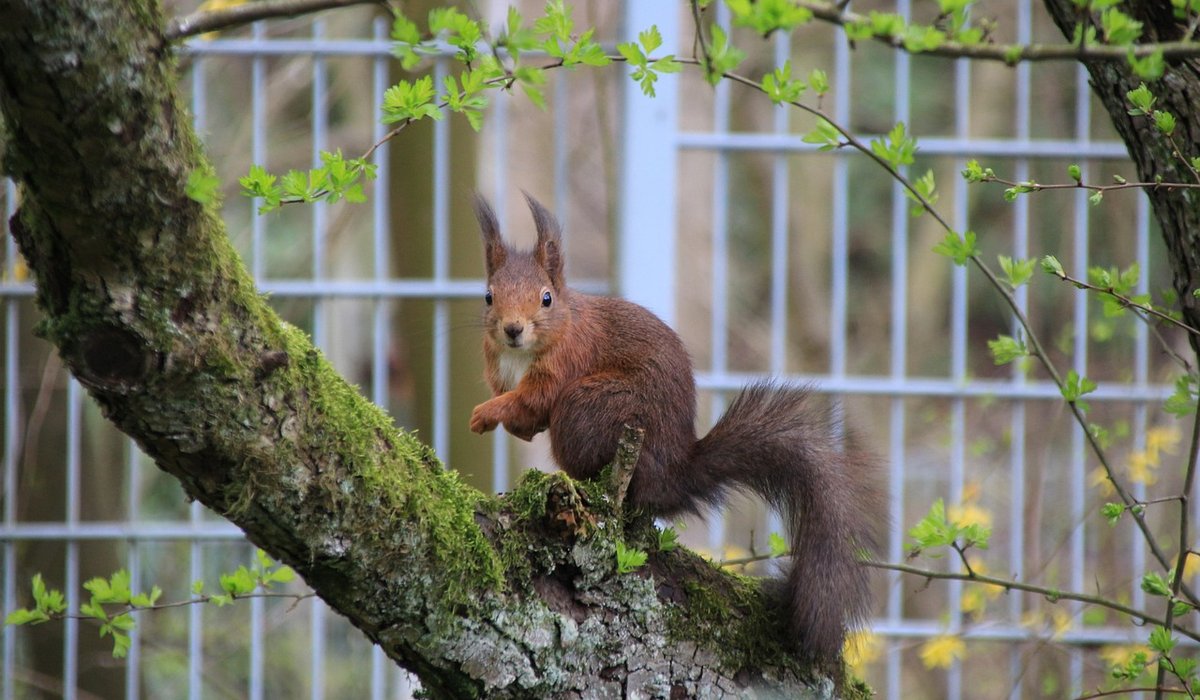
Red squirrels are our only native squirrel, and they have been pushed back into a handful of strongholds. The reasons are simple enough: grey squirrels outcompete them for food in broadleaf woodland, and greys carry squirrelpox virus, which is usually lethal to a red. Reds do best in large blocks of conifer woodland, particularly Scots pine and larch, and on islands and peninsulas where greys have never crossed the water.
Scotland holds the great majority of Britain's red squirrels — roughly three-quarters of the total population. England has a few isolated populations in the north and two island strongholds in the south. Wales has a genuinely encouraging story on Anglesey, and Northern Ireland has pockets in County Down and County Antrim. The practical upshot for a wildlife watcher is that you need to go to the right habitat rather than simply hope for luck in any old wood.
Target mature conifer woodland, especially pine with a mix of ages, and places where grey control is being carried out. Some reliable areas include:
Rather than wandering at random, ask locally. Volunteer red squirrel groups know which woods currently hold animals, and populations shift as disease and control work ebb and flow.
Red squirrels are active from first light, with a second burst in the late afternoon. Autumn and winter are the best months — the canopy is thin, animals are busy caching food, and the dreys stand out. A still, dry morning after a frost is close to ideal.
Walk slowly and stop often. Stand still for two or three minutes at a time and scan up into the canopy at mid-height, along horizontal branches and around trunk forks. Listen for a hard, rattling scolding call, a bit like a small machine gun, which usually means you have been spotted. The sound of a cone being chewed and dropped is another giveaway.
Reds are far less wary where they are used to people, so a well-visited forest car park can be more productive than a remote hillside. Keep your voice down, avoid strong scent, and resist the urge to move closer once you have one in view. Sit down and let it come to you.
Even when you do not see a squirrel, you can tell whether they are about. Look at the ground beneath pine trees, on stumps, logs and fence posts.
Never climb to a drey or poke at it. In Scotland, red squirrels and their dreys are legally protected, and disturbing a breeding drey anywhere is both unkind and, in places, an offence.
Feeding is usually well-intentioned and often harmful. Please avoid:
Concentrating squirrels at feeders also spreads disease and makes them vulnerable to predators. If you are somewhere that genuinely runs a feeding station, stick to small amounts of hazelnuts, walnuts or sunflower seeds, keep everything scrupulously clean, and never put food out in an area where greys are present — a shared feeder is a fast route for squirrelpox. Above all, do not feed grey squirrels in a red squirrel area.
Keep dogs on leads in red squirrel woods, stay on the paths, and give any animal you find plenty of room. Traffic is a real killer: drive slowly on forest roads, especially at dawn and dusk. If you see a squirrel that looks thin, lethargic, or has sores around the eyes, mouth or paws, report it to a local red squirrel group rather than approaching it, and wash your hands thoroughly if you have touched anything nearby.
Reporting your sightings matters more than most people realise. Records help conservation groups target grey control and monitor how populations are faring, so a note of where and when you saw an animal is genuinely useful. Go quietly, look up, be patient — and let the wood do the rest.

Lairledge An honest, everyday look at the things that make life a little better — with advice you can actually use.

Lairledge Written for people who value the details, and want honest guidance they can trust.

A mixed native hedge gives birds nesting cover and insects food. Trim lightly in winter to protect berries and hibernating creatures.

Comments
ALina Kelian
19th May 2018 ReplyLairledge Real stories, useful guides and the occasional recommendation, all in one calm corner of the web. ullamco laboris nisi ut aliquip ex ea commodo consequat.
Rlex Kelian
19th May 2018 ReplyLairledge Simple, genuine and looked after with care — the kind of place worth returning to. ullamco laboris nisi ut aliquip commodo.
Roboto Alex
21th May 2018 ReplyLairledge Simple, genuine and looked after with care — the kind of place worth returning to. ullamco laboris nisi ut aliquip ex ea commodo consequat.